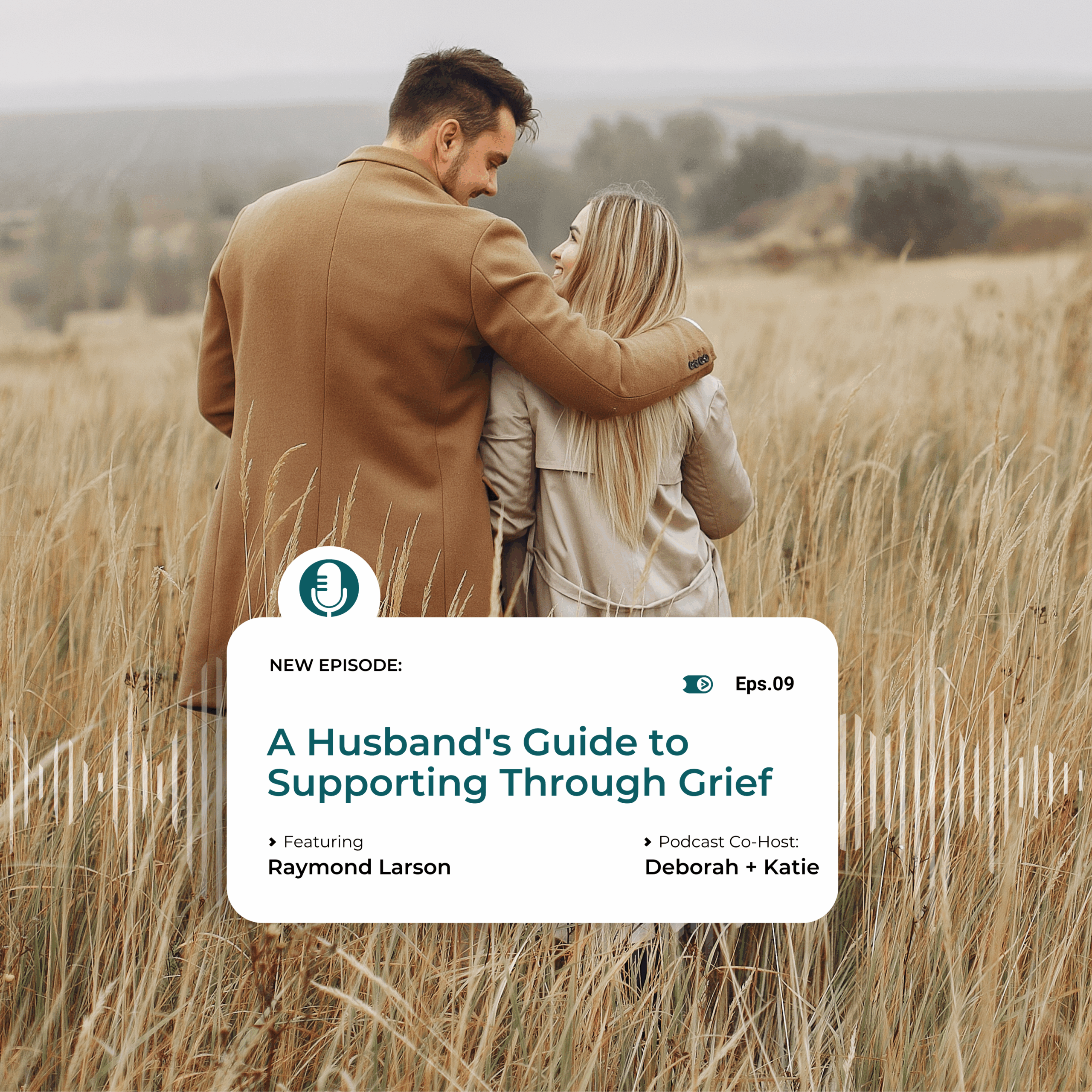
How to Support a Grieving Spouse: A Husband’s Guide to Grief Support
What does it actually mean to be supporting a grieving spouse when there are no clear answers, no timeline, and no way to fix what’s been lost? In this powerful conversation, Deborah Larson sits down with her husband, Raymond Larson, to share what most people misunderstand about grief—and what truly helps when someone you love is hurting. Raymond isn’t speaking from theory. He experienced the death of his first wife after 31 years of marriage, and later walked alongside Deborah through the sudden and tragic loss of her son, Jeremy Stoke. Two very different losses, two very different grief experiences, but one consistent truth: supporting a grieving spouse requires far more than words.
One of the most important distinctions Raymond shares is the difference between anticipated grief and sudden loss. When loss is expected, there is often time to mentally prepare, even if the pain is still overwhelming. But sudden loss creates a different kind of impact—shock, disorientation, and emotional overload that can leave someone feeling like their entire world has been ripped out from under them. When you are supporting a grieving spouse, understanding this difference matters more than you think. Without it, expectations get misaligned, and well-intentioned support can unintentionally create more pressure.
Many people default to offering words when someone is grieving—phrases like “let me know what you need” or “I’m here for you.” But when you are supporting a grieving spouse, those words often don’t land the way you think they do. Grief doesn’t respond to solutions. It doesn’t respond to advice. What it does respond to is presence. Raymond emphasizes a simple but powerful shift: presence over performance. That means sitting in silence when there are no words, listening without trying to fix anything, and being emotionally available even when it feels uncomfortable. Because grief isn’t something you solve—it’s something you sit inside with someone else.
There’s also a tension many spouses feel when trying to support their partner through loss: do you bring up the person they lost, or do you avoid it to protect them from more pain? What Raymond and Deborah make clear is that avoiding the loss doesn’t protect your partner—it isolates them. When you are supporting a grieving spouse, it’s important to allow space for memories, to say the name of the person they lost, and to let emotions come without judgment. Grief doesn’t disappear when it’s ignored. It deepens, and often in silence.
One of the hardest parts of navigating grief within a relationship is learning how to balance honoring the past while still moving forward together. Supporting a grieving spouse doesn’t mean pushing them to “move on,” and it doesn’t mean staying stuck in the pain either. It means creating space for both realities to exist at the same time. Raymond shares that healing required respecting the life that was lost while also allowing room to build something new. Moving forward doesn’t erase what happened—it changes how it is carried.
For Raymond and Deborah, faith became an anchor during their most difficult moments. After experiencing profound loss, they made the decision to move across the country to Texas in search of healing and a fresh start. That decision wasn’t about escaping grief—it was about creating space to rebuild. And that’s what many people misunderstand about healing. It’s not about forgetting or replacing what was lost. It’s about learning how to live again while still carrying the love and the memories with you.
If you are supporting a grieving spouse right now, here is the truth most people need to hear: you don’t need perfect words, and you don’t need to have the right answers. What matters most is that you stay. Stay present, stay consistent, and stay willing to walk through the discomfort with them. Because supporting a grieving spouse isn’t about fixing their pain—it’s about making sure they don’t have to carry it alone.
If this resonates with you and you’re trying to understand your role in this season, the next step is clarity. Schedule a Clarity Call to better understand how to support your partner in a way that actually helps, and join a community of people who are learning how to navigate grief with intention and support. You don’t have to figure this out on your own.
The truth is, love doesn’t remove grief. But it does change how someone carries it. And when you are supporting a grieving spouse in the right way, your presence becomes the reason they don’t collapse under the weight of it.

Comments +